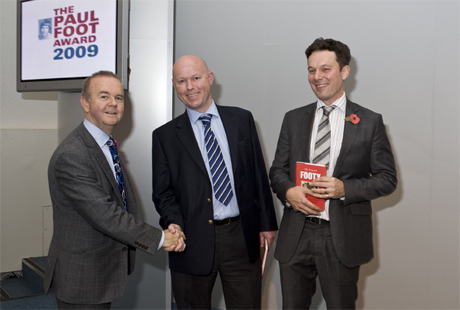
Ian Hislop, the editor of Private Eye, described Cobain’s work as “excellent – a real Footy campaign. Dogged pursuit of the uncomfortable but true.
Alan Rusbridger, Cobain’s editor at the Guardian, added: “Ian Cobain has followed the allegations of torture with determination, an obsessive eye for detail and stamina. His investigation has taken many months of digging and chasing. I'm sure Paul would have admired it. Investigative journalism is not yet dead!
Ian Cobain, writing in the Guardian and Guardian.co.uk, has covered a long-running investigation into Britain’s involvement in the torture of terror suspects detained overseas. He reported on the allegations of British complicity made by a handful of detainees or their lawyers and was able to locate and highlight the evidence that supports some of these allegations. He reported on the existence of a secret, government-sanctioned interrogation policy that underpinned what MI5 has been doing – a policy that led to suspects being tortured.
Last March, Gordon Brown told the Commons that the interrogation policy was to be rewritten and that it would then be made public. In June 2009 he was able to disclose the fact that Tony Blair was aware of this policy.
The Paul Foot Award Short List 2009
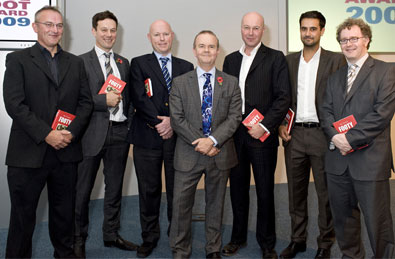
Jonathan Calvert
and Clare Newell
Sunday Times
Calvert and Newell of the Sunday Times Insight team exposed a number of financial and legislative abuses in the Lords which had previously escaped scrutiny in a body which retains its antiquated gentlemen’s club ethos. The stories have already had serious ramifications and point to an urgent need for a reformed second chamber.
Their revelations in January 2009 that peers were prepared to help lobbyists amend legislation in return for cash resulted in two peers being suspended for the first time since the 17th century. They also highlighted the widespread practice of peers clocking in to the chamber for a minute just so they can collect allowances. They also produced a series of articles which alleged that individual peers were defrauding the taxpayer by claiming allowances they should not have been entitled to, which have led to fraud investigations.
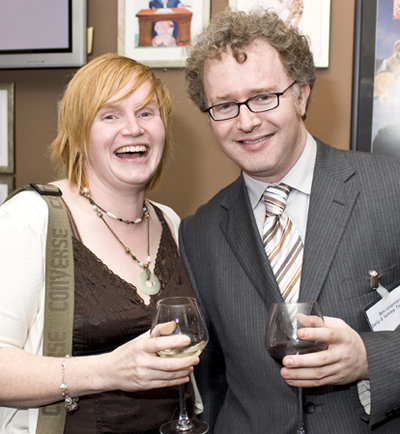
Sunday and Daily Telegraph
Ben Leapman’s investigation into MPs’ expenses began in 2004, and culminated in a series of articles published in the Sunday Telegraph and Daily Telegraph in May 2009. The story exposed MPs’ exploitation of parliamentary allowances to subsidise their lifestyles and multiple homes, and forced the disclosure of expenses details for every MP.
Leapman’s original request was made in January 2005, when the Freedom of Information Act came into force. After repeated refusals and appeals, his case, and that of two other journalists – Jonathan Ungoed-Thomas and Heather Brooke – was finally carried to the high court in May 2008, which ruled in favour of a full disclosure.
The Guardian
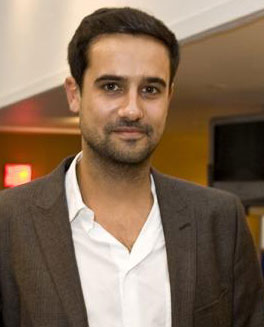
Paul Lewis’s investigation into the death of Ian Tomlinson at the G20 protests in the spring established that a police officer had struck Tomlinson with a baton and pushed him to the ground moments before he died near the Bank of England on 1 April. A key component of the story was a video filmed by a New York hedge fund manager on his digital camera, published online on Tuesday 7 April and in print the following day, showing the incident in full.
Lewis’s investigation relied in equal measure, however, on a reconstruction of Tomlinson’s last 30 minutes alive, drawn from oral, photographic and video evidence obtained from dozens of other witnesses he had tracked down through “crowd-sourcing”. Their testimony was included in a dossier contradicting the police’s version of events which the Guardian submitted to the Independent Police Complaints Commission (IPCC). The commission immediately launched a criminal investigation. When a postmortem revealed Mr Tomlinson had died of internal bleeding rather than a heart attack, the TSG officer was questioned on suspicion of manslaughter. The CPS is considering whether to bring charges.
Yorkshire Post
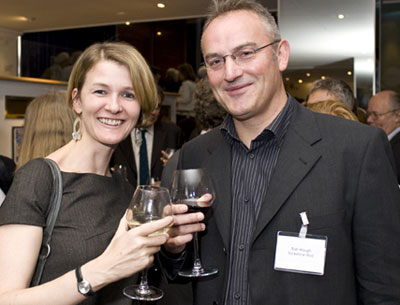
Waugh’s exposure of cavalier spending at Leeds Metropolitan University involved examination of thousands of staff credit card statements and a wider investigation into the management culture surrounding the university. His exposure discrediting the takeover of Sheffield Wednesday football club uncovered links with a money launderer convicted through an FBI sting, a history of debts and a series of highly questionable links with businesses in Europe.
Waugh’s long-running investigation into Leeds City Credit Union, the country’s biggest, revealed wholesale mismanagement, complete with a chief executive attempting to run the institution as her own personal business.
The stories triggered the unraveling of the credit union’s chronic mismanagement which promoted the sacking of chief executive Sue Davenport and subsequently revealed huge under-reporting of bad debts requiring an emergency £4m bailout from public funds. West Yorkshire Police fraud squad are now conducting an inquiry.
Daily Mail
Shahrokh Mireskandari was one of the most high profile, outspoken and expensive lawyers in London, whose clients included foreign royalty and some of the richest men in the world. But he came to wider attention representing Assistant Commissioner Tarique Ghaffur in that officer’s litigation against the Metropolitan Police, promising publicly to bring down the upper echelon of the force, then led by Sir Ian Blair.
The investigation, using dozens of sources, into Mireskandari’s background on both sides of the Atlantic revealed his criminal past and the bogus nature of his qualifications and claims of experience. It also showed his close and mutually beneficial cultivation of Met Police Commander Ali Dizaei and Keith Vaz MP, chairman of the Commons home affairs select committee. Since the articles appeared Mireskandari and his senior partner have been suspended by the Law Society and the offices of Mireskandari’s West End firm Dean and Dean have been raided by the Solicitors Regulation Authority and closed. He faces a disciplinary tribunal hearing later this year.
The Paul Foot Award Highly Commended 2009
Susie Boniface
Sunday
Mirror
Nuclear test veterans campaign
Martin Hickman
Independent
Quest for palm oil for British consumers, devastating
the rainforest.
Dan McDougall
News
of the world / Observer
Exploitation of child workers for British high street
retailers.
Melanie Newman
Times Higher Education Supplement
£36m corruption at London Metropolitan University.
David Rose
Vanity Fair and Mail on Sunday
Campaign for former Guantanamo prisoner Binyam Mohamed
The Paul Foot Award was set up jointly by Private Eye and the Guardian in memory of the journalist and left-wing campaigner who died in 2004. The 2009 prize was presented at The Spin Bar, Millbank Tower, on Monday 2 November, with £5,000 going to the winner. Five runners-up received £1,000 each. The evening was recorded for the eyePlayer - Footie would have been proud.
The judges were Clare Fermont, Bill Hagerty, Ian Hislop, Richard Ingrams, Simon Jenkins and chairman Brian MacArthur. (Alan Rusbridger stood down as a judge to prevent any conflict of interest.)
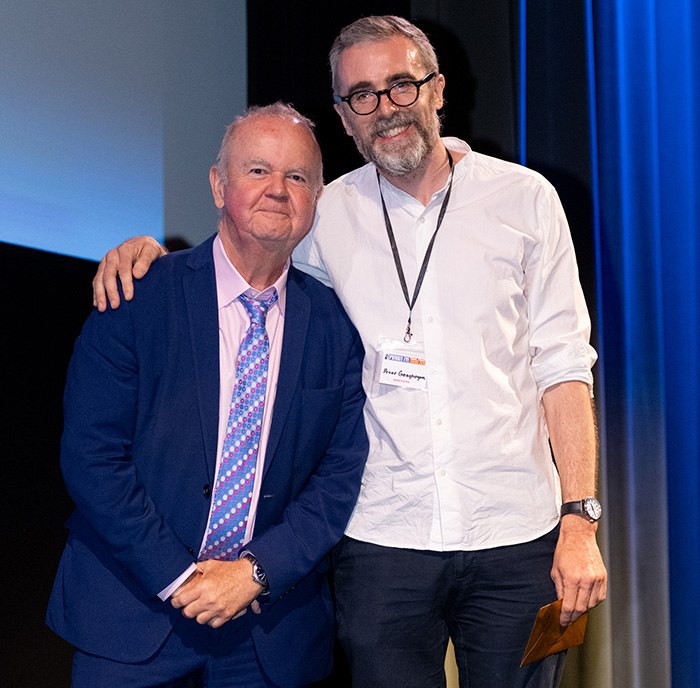
Peter Geoghegan & Khadija Sharife
Democracy for Sale
How Labour Together hired a PR firm to target journalists
The Private Eye Paul Foot Award for Investigative and Campaigning Journalism 2026 has been awarded to PETER GEOGHEGAN & KHADIJA SHARIFE, DEMOCRACY FOR SALE, for their entry How Labour Together hired a PR firm to target journalists.
The Democracy for Sale newsletter uncovered how campaign group Labour Together hired a PR firm to build dossiers on reputable journalists with the intent to discredit them. The investigation led to the resignation of former Labour Together chief Josh Simons from his post as parliamentary secretary in the Cabinet Office.
The award, worth £8,000 and now in its twenty-second year, was set up in memory of renowned journalist Paul Foot who died in 2004, and recognises the UK’s most brilliant, talented and determined journalists working in the fields of investigative and campaigning journalism.
The 2026 awards ceremony was hosted tonight at BAFTA by Ian Hislop, Editor of Private Eye, who said: “Any excuse for a party, as Zack Polanski put so beautifully. It's been an extraordinary year for the news. Journalism, even though it takes a long time, is worth doing, as none of it goes away. It's extraordinary also what people do now to make journalism affordable and accessible. My final words to you now are what the whole country wants to say to the Prime Minister: ‘Why don't you return to the bar?’.”
Pádraig Reidy, Chair of Judges, The Private Eye Paul Foot Award, commented: “Each year, the Paul Foot Award is a chance to learn about new talent, new issues, and new ways of telling important stories. The shortlists reflect only a fraction of the skill, knowledge, talent and sheer bloody-mindedness of journalism in this country.”
A piece on the winners will appear in the print issue of Private Eye, available on 10th June. Interviews with all the shortlisted journalists will also be available on the Private Eye Page 94 podcast.
On the night, a special award worth £1,000 was given also to Suzanne Antelme, The Reading Chronicle, for her investigation Remedicare: the SEND provider run by a drug smuggler. Meanwhile, Ian’s speech also recognised with a special mention Simon Ezra-Jackson, The Damned Magazine, for his inquiry 'Fashion Police: Does the St Andrews Charity Fashion Show...give to charity?'.
The Shortlist
IN ALPHABETICAL ORDER BY JOURNALIST:
Lindsay Bruce
The Press and Journal
Trapped by RAAC Campaign
Aberdeen’s Press and Journal led a relentless fight for justice for homeowners facing financial ruin after their houses were found to be unsafe due to the use of RAAC (aerated concrete) in their construction. The campaign, driven by reporter Bruce, eventually secured a £4.3m package for residents in one of the poorest parts of the city.
Adam Bychawski
Big Issue/The Lead
How the UK fails victims of miscarriages of justice
Bychawski’s reporting revealed how a 2014 legal change led to many people who were wrongly convicted and imprisoned, often for years, being denied compensation for their ordeal.
Joe Duggan
i paper
Silicosis scandal of killer kitchen worktops
Duggan told the story of workers who have suffered and even died of silicosis after cutting quartz kitchen worktops without sufficient protection. The reporting has been followed by a criminal investigation into one death and the tabling of a bill outlawing unsafe quartz cutting.
Peter Geoghegan & Khadija Sharife
Democracy for Sale
How Labour Together hired a PR firm to target journalists
The Democracy for Sale newsletter uncovered how campaign group Labour Together had hired a PR firm to build dossiers on reputable journalists with the intent to discredit them. The investigation led to the resignation of former Labour Together chief Josh Simons from his post as parliamentary secretary in the Cabinet Office.
Chloe Hadjimatheou
The Observer
The real Salt Path investigation
Hadjimatheou’s investigation into the story behind the publishing sensation The Salt Path uncovered a trail of deceit, questionable claims and dubious medical diagnosis at odds with the inspiring story of triumph over adversity portrayed in the bestselling books and film.
Daniel Timms, Mollie Simpson, Dan Hayes, Jack Walton, Abi Whistance
Sheffield Tribune
Andrew Milne: the litigious bully who demanded five-figure sums from homeowners
The Tribune newsletter investigated allegations that London-based solicitor Andrew Milne used leasehold loopholes to extract sums of £25,000 upwards from Yorkshire homeowners. Milne has subsequently been arrested as part of a criminal investigation.

Peter Geoghegan and Khadija Sharife join a distinguished list of journalists to have received the Paul Foot Award since it was established twenty-two years ago, including:
2025: Patrick Butler & Josh Halliday, The Guardian
2024: Tristan Kirk, Evening Standard
2023: David Conn, The Guardian
2022: David Collins & Hannah Al-Othman, The Sunday Times
2021: Robert Smith, Financial Times
2020: Alexandra Heal, The Bureau of Investigative Journalism/Various Outlets
2019: Emily Dugan, Buzzfeed
2018: Amelia Gentleman, The Guardian
2017: Emma Youle, Hackney Gazette
2014: Heidi Blake & Jonathan Calvert (The Sunday Times) and Andrew Bousfield & Richard Brooks (Private Eye)
2013: David Cohen, Evening Standard
2012: Andrew Norfolk, The Times
2011: Nick Davies, The Guardian
2010: Clare Sambrook, End Child Detention Now campaign, Various Outlets
2009: Ian Cobain, The Guardian
2008: Richard Brooks (Private Eye) and Camilla Cavendish (The Times )
2007: Rob Evans & David Leigh (The Guardian) & Deborah Wain (Doncaster Free Press)
2006: David Harrison, The Sunday Telegraph
2005: John Sweeney, Daily Mail
Queries
Any queries should be directed to Anna Zanetti at Midas PR.
Tel: 0758 312 7515
Email: Anna.Zanetti@midas-group.com