Issue 1686

With Bio-Waste Spreader: “Andy Burnham has called for Britain to develop a closer relationship with the EU and confirmed a UK/EU summit next month, with a trade deal on food to reduce red tape and sanitary checks at the border near the top of the agenda. But what are the chances of improving access for UK food and drink to the EU’s protectionist single market? The PM is right to be concerned…”

With MD: “‘Given the severe financial pressures in the NHS, and a relentless rise in demand, it is time to acknowledge that, as things stand, getting to 92 percent of patients treated within 18 weeks by the end of this parliament is not going to happen.’ So says Matthew Hopkins, a director of the NHS Alliance, which represents most trusts and integrated care boards in England. This is a blow for Labour…”

With Dr B Ching: “The Department for Transport heralded a new west-coast-mainline dawn when it announced Avanti West Coast would be nationalised in March ‘to improve infrastructure’ and cut delays, but said infrastructure was nationalised at least 12 years ago. DafT said infrastructure accounts for ‘a third of delays’ on the mainline (implying it’s not responsible for the rest) but that’s contradicted by the most recent stats…”

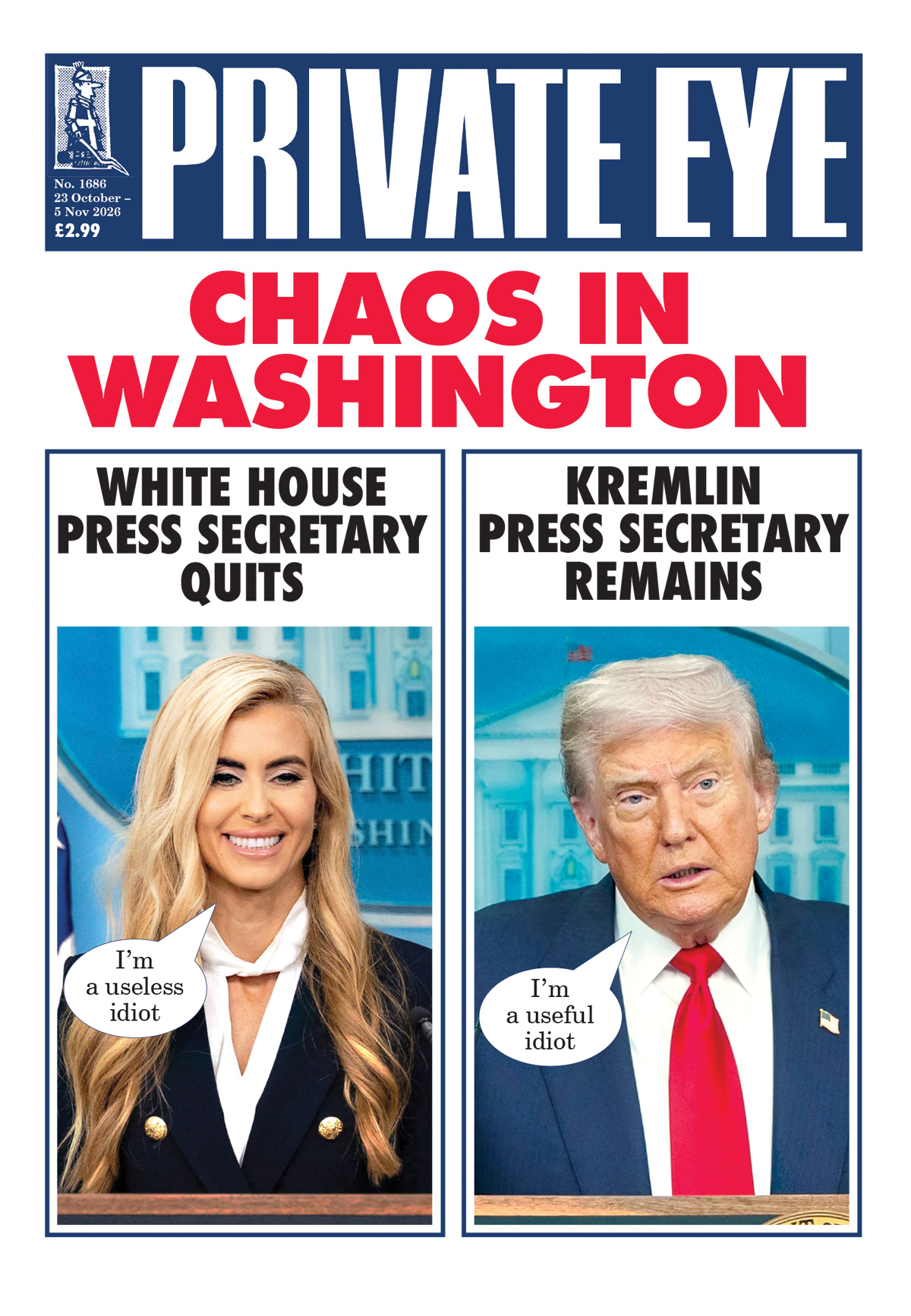
With Lady Liberty: “In the end, she lasted just 0.45 Scaramuccis. ‘I was given the offer last Wednesday,’ Katie Zacharia told Fox News’s Sean Hannity after her first – and, it would turn out, only – briefing as White House press secretary. She was asked to start on Monday ‘and have a press briefing at 9.30 in the morning on Tuesday’. Her sole 14-minute appearance at the podium was a disaster: the highlight was when she referred to ‘my president – ah, excuse me, my husband’ stepping up to look after their children…”

With Remote Controller: “In the mid-1960s, ITV’s Coronation Street routinely had 20m viewers. There was only one other home entertainment option (BBC TV) in contrast with the hundreds now, but it tells the story of terrestrial television that, on Thursday 8 October 2026, the soap drew just 2m. Producers could take consolation that other historical behemoths (EastEnders, News at 10) go just as low – but one show beat the trend: 10m people, or 60 percent of the available audience, watched The Celebrity Traitors…”

With Old Sparky: “Tree-burning electricity company Drax is trying to hitch its faltering wagon to the putative AI boom (surely ‘bubble’? Ed.) via an enormous data centre, to be powered directly from its main Yorkshire power station. But it’s not going well. When still purely a coal-burner, Drax fell into the hands of its creditors back in 2003, emerging after canny refinancing as an independent PLC in 2005…”

With Lunchtime O’Boulez: “The Associated Board of the Royal Schools of Music, the venerable (and charitable) organisation that runs the graded exams children slog away at, has been fined £150,000 by exam regulator Ofqual over shortcomings in managing assessment evidence – about which senior management have kept rather quiet. ABRSM’s ‘errors in service delivery’ include failing to keep recorded data sent in by candidates (who can’t challenge results) and failing to spot malpractice by middlemen…”

Letter from Abu Dhabi
From Our Own Correspondent: “Leading members of Abu Dhabi’s ruling Al Nahyan dynasty have a lot on their plates: trouble brewing at their beloved Manchester City FC and war on their doorstep in the Gulf. Yet they still have time to oversee a business empire which stretches around the world, including airlines, ports, oil companies, arms manufacturers and chunks of luxury real estate in London, Paris and beyond…”

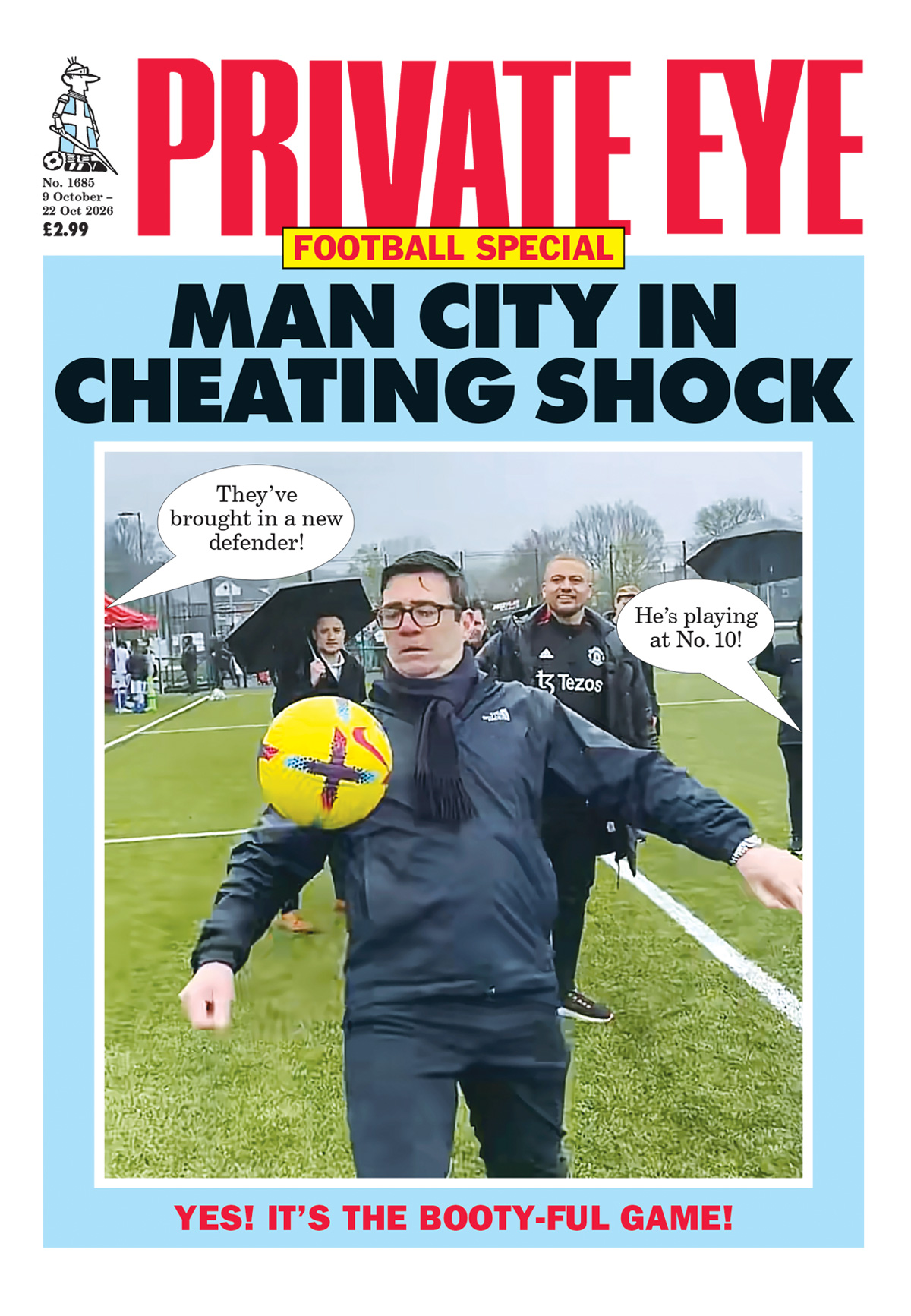
With Gold Digger: “The key findings by the Premier League commission on Manchester City’s misdeeds – ‘sham commercial deals’ to ‘artificially inflate the club’s revenues, and reduce its costs, by more than £900m... to appear to comply with financial rules’ – were exactly the sort of thing that competent auditing would pick up. The Premier League did note that City had ‘concealed the true state of its finances from its auditors’, as financial miscreants usually do. But…”
To read all these columnists and more in full, get the latest edition of Private Eye - you can subscribe here and have the magazine delivered to your home every fortnight.
Next issue on sale: 5th November 2026
Next issue on sale: 5th November 2026