The joint winners are Camilla Cavendish of The Times, for her investigation into the many injustices which have resulted from the Children Act 1989 and the professional cultures that have grown up around child “protection”; and Richard Brooks of Private Eye, for his investigation into the mismanagement and financial irregularities behind the sale of the government’s development business, Actis.
Ian Hislop, editor of Private Eye, said: “In these difficult economic times the Paul Foot Award is proud to offer two winners for the price of one! The standard was so high this year that the judges had to give a joint award, shared by a forensic financial investigation into a government scandal and a dogged critical campaign against legal injustice. Both are firmly in the tradition of first-rate journalism that Paul exemplified.”
Alan Rusbridger, editor of the Guardian, commented: “I think Paul would have admired the two winners for very different reasons. Richard Brooks is a digger and a troublemaker who niggles away at difficult subjects in a meticulous, punchy and highly effective way. Camilla Cavendish would have appealed to Paul’s campaigning heart for the way in which she pursued one story through thick and thin. Both are extremely worthy winners in the Foot tradition.”
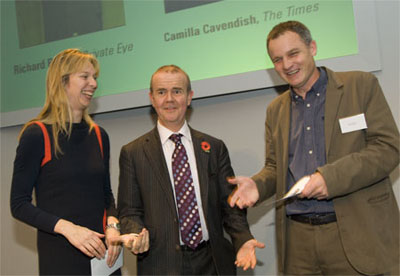
Richard Brooks
Private
Eye
Early in 2007 Richard Brooks discovered, buried
away in a memo submitted to a Public Accounts
Committee inquiry into the government’s
management of shareholdings in various corporations,
a highly valuable but largely unheard of fund
management company called Actis. Brooks then wrote
a series
of articles exposing the sale of
a key government international development business
to the organisation’s own management for
a fraction of its value, and the transformation
of an effective development body into a money-making
machine for executives at the expense of the world’s
poor.
Camilla Cavendish
The
Times
The outrageous miscarriages of justice which are
being perpetrated on children, because unaccountable
social workers are removing them from parents
in closed courts with virtually no scrutiny, have
been raised before. But in a series of articles
for the Times, Camilla Cavendish provided a more
detailed analysis of the many injustices which
result from the Children Act 1989 and from the
professional cultures which have grown up around
child “protection”. She did so in
a sustained way which will force the authorities
to think again. The Times’ wider campaign
included several leading articles on various aspects
of the issue. Many disparate campaign groups were
encouraged to put their links on the Times website,
and urged readers to email their MP. Hundreds
of readers have done so, and the letters those
MPs have written to Jack Straw have put real pressure
on the Ministry of Justice.
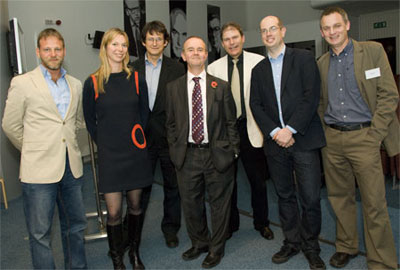
Andrew Gilligan, Evening Standard, whose investigation exposed the so-called “Lee Jasper affair”, serious financial irregularities in London’s City Hall and the London Development agency, involving a senior aide to the then mayor, Ken Livingstone. The investigation has so far resulted in six police inquiries, seven arrests and Mr Jasper’s resignation and was credited by some, including Mr Livingstone, with his defeat in the recent mayoral election.
Warwick Mansell, Times
Educational Supplement, who wrote
extensively about the government’s school
testing/exams regime, including the first major
story on the Sats test marking scandal which led
to the late return of thousands of pupils’
test papers and the sacking of test contractor
ETS Europe, and the first story bringing together
opposition across the education profession to
the government’s league tables/targets/testing
regime of school accountability.
Dan McDougall, The
Observer’s South Asia Correspondent,
whose undercover investigations in India, Pakistan,
Nepal and Bangladesh led to the shaming of three
of the world’s top five retailers, Esprit,
Primark and Gap Inc, for using children in their
supply chains. All three firms sacked or fined
major suppliers, cancelled millions of pounds
worth of contracts and launched multi-million
pound social funds.
Jim Oldfield, Rossington Community Newsletter, South Yorkshire Newspapers, who, long before Fleet Street had ever heard of eco-towns, started chronicling the activities of a group of landowners and speculators to plant one in the village of Rossington – Rossington Eco-Town - apparently against the wishes of 13,000-odd residents.
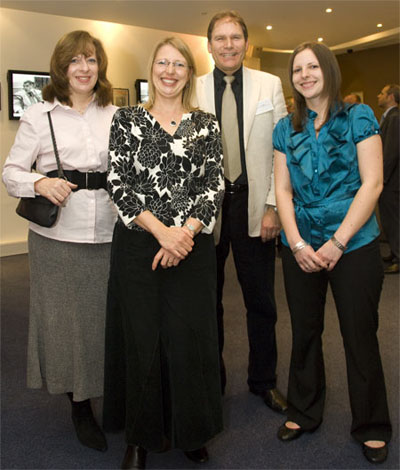
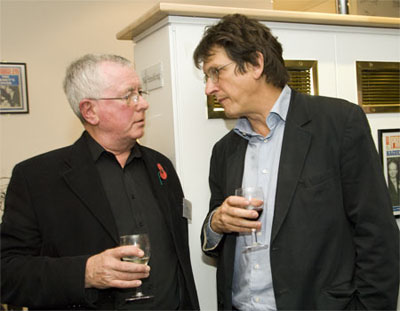
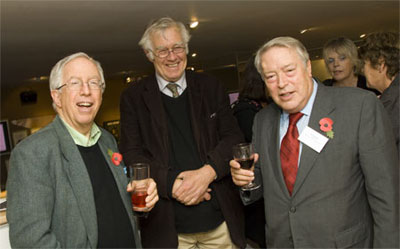
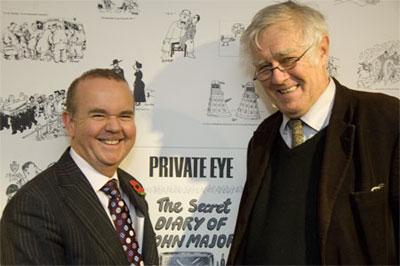
The judges for this year’s award were, in alphabetical order: Clare Fermont, Bill Hagerty, Ian Hislop, Richard Ingrams, Brian MacArthur (chair), Alan Rusbridger, and Michelle Stanistreet.
Peter Geoghegan & Khadija Sharife
Democracy for Sale
How Labour Together hired a PR firm to target journalists
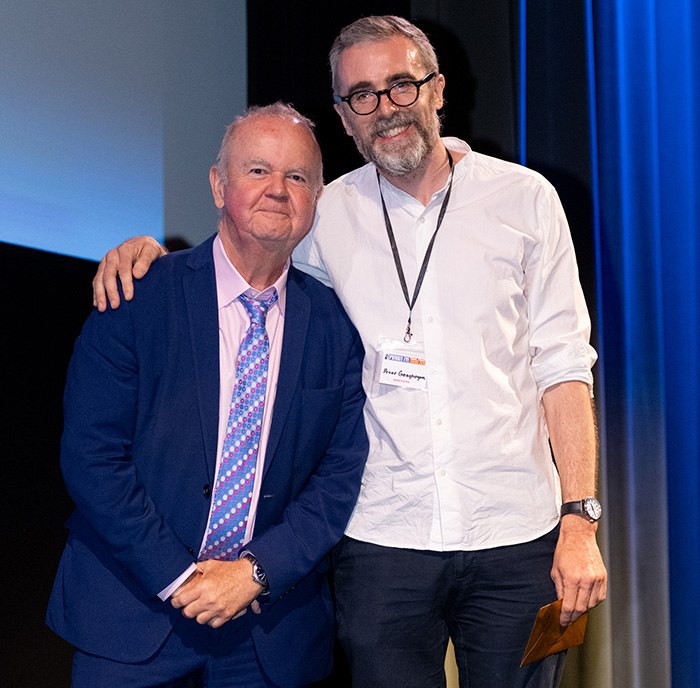
The Private Eye Paul Foot Award for Investigative and Campaigning Journalism 2026 has been awarded to PETER GEOGHEGAN & KHADIJA SHARIFE, DEMOCRACY FOR SALE, for their entry How Labour Together hired a PR firm to target journalists.
The Democracy for Sale newsletter uncovered how campaign group Labour Together hired a PR firm to build dossiers on reputable journalists with the intent to discredit them. The investigation led to the resignation of former Labour Together chief Josh Simons from his post as parliamentary secretary in the Cabinet Office.
The award, worth £8,000 and now in its twenty-second year, was set up in memory of renowned journalist Paul Foot who died in 2004, and recognises the UK’s most brilliant, talented and determined journalists working in the fields of investigative and campaigning journalism.
The 2026 awards ceremony was hosted tonight at BAFTA by Ian Hislop, Editor of Private Eye, who said: “Any excuse for a party, as Zack Polanski put so beautifully. It's been an extraordinary year for the news. Journalism, even though it takes a long time, is worth doing, as none of it goes away. It's extraordinary also what people do now to make journalism affordable and accessible. My final words to you now are what the whole country wants to say to the Prime Minister: ‘Why don't you return to the bar?’.”
Pádraig Reidy, Chair of Judges, The Private Eye Paul Foot Award, commented: “Each year, the Paul Foot Award is a chance to learn about new talent, new issues, and new ways of telling important stories. The shortlists reflect only a fraction of the skill, knowledge, talent and sheer bloody-mindedness of journalism in this country.”
A piece on the winners will appear in the print issue of Private Eye, available on 10th June. Interviews with all the shortlisted journalists will also be available on the Private Eye Page 94 podcast.
On the night, a special award worth £1,000 was given also to Suzanne Antelme, The Reading Chronicle, for her investigation Remedicare: the SEND provider run by a drug smuggler. Meanwhile, Ian’s speech also recognised with a special mention Simon Ezra-Jackson, The Damned Magazine, for his inquiry 'Fashion Police: Does the St Andrews Charity Fashion Show...give to charity?'.
The Shortlist
IN ALPHABETICAL ORDER BY JOURNALIST:
Lindsay Bruce
The Press and Journal
Trapped by RAAC Campaign
Aberdeen’s Press and Journal led a relentless fight for justice for homeowners facing financial ruin after their houses were found to be unsafe due to the use of RAAC (aerated concrete) in their construction. The campaign, driven by reporter Bruce, eventually secured a £4.3m package for residents in one of the poorest parts of the city.
Adam Bychawski
Big Issue/The Lead
How the UK fails victims of miscarriages of justice
Bychawski’s reporting revealed how a 2014 legal change led to many people who were wrongly convicted and imprisoned, often for years, being denied compensation for their ordeal.
Joe Duggan
i paper
Silicosis scandal of killer kitchen worktops
Duggan told the story of workers who have suffered and even died of silicosis after cutting quartz kitchen worktops without sufficient protection. The reporting has been followed by a criminal investigation into one death and the tabling of a bill outlawing unsafe quartz cutting.
Peter Geoghegan & Khadija Sharife
Democracy for Sale
How Labour Together hired a PR firm to target journalists
The Democracy for Sale newsletter uncovered how campaign group Labour Together had hired a PR firm to build dossiers on reputable journalists with the intent to discredit them. The investigation led to the resignation of former Labour Together chief Josh Simons from his post as parliamentary secretary in the Cabinet Office.
Chloe Hadjimatheou
The Observer
The real Salt Path investigation
Hadjimatheou’s investigation into the story behind the publishing sensation The Salt Path uncovered a trail of deceit, questionable claims and dubious medical diagnosis at odds with the inspiring story of triumph over adversity portrayed in the bestselling books and film.
Daniel Timms, Mollie Simpson, Dan Hayes, Jack Walton, Abi Whistance
Sheffield Tribune
Andrew Milne: the litigious bully who demanded five-figure sums from homeowners
The Tribune newsletter investigated allegations that London-based solicitor Andrew Milne used leasehold loopholes to extract sums of £25,000 upwards from Yorkshire homeowners. Milne has subsequently been arrested as part of a criminal investigation.

Peter Geoghegan and Khadija Sharife join a distinguished list of journalists to have received the Paul Foot Award since it was established twenty-two years ago, including:
2025: Patrick Butler & Josh Halliday, The Guardian
2024: Tristan Kirk, Evening Standard
2023: David Conn, The Guardian
2022: David Collins & Hannah Al-Othman, The Sunday Times
2021: Robert Smith, Financial Times
2020: Alexandra Heal, The Bureau of Investigative Journalism/Various Outlets
2019: Emily Dugan, Buzzfeed
2018: Amelia Gentleman, The Guardian
2017: Emma Youle, Hackney Gazette
2014: Heidi Blake & Jonathan Calvert (The Sunday Times) and Andrew Bousfield & Richard Brooks (Private Eye)
2013: David Cohen, Evening Standard
2012: Andrew Norfolk, The Times
2011: Nick Davies, The Guardian
2010: Clare Sambrook, End Child Detention Now campaign, Various Outlets
2009: Ian Cobain, The Guardian
2008: Richard Brooks (Private Eye) and Camilla Cavendish (The Times )
2007: Rob Evans & David Leigh (The Guardian) & Deborah Wain (Doncaster Free Press)
2006: David Harrison, The Sunday Telegraph
2005: John Sweeney, Daily Mail
Queries
Any queries should be directed to Anna Zanetti at Midas PR.
Tel: 0758 312 7515
Email: Anna.Zanetti@midas-group.com