
Stop the pressers!
US Eye , Issue 1686
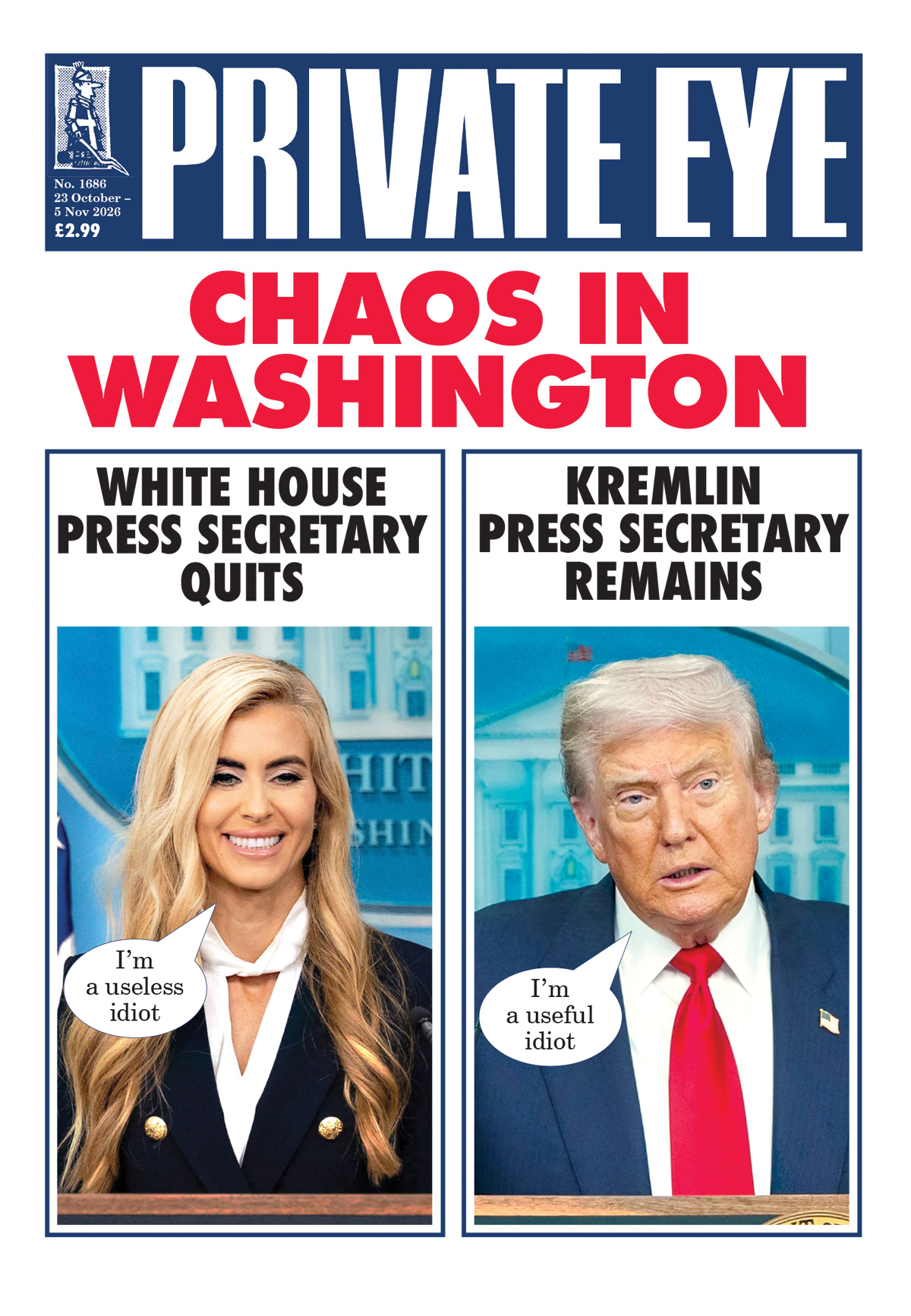
IN THE end, she lasted just 0.45 Scaramuccis. “I was given the offer last Wednesday,” Katie Zacharia told Fox News’s Sean Hannity after her first – and, it would turn out, only – briefing as White House press secretary.
She was asked to start on Monday “and have a press briefing at 9.30 in the morning on Tuesday”. Her sole 14-minute appearance at the podium was a disaster: the highlight was when she referred to “my president – ah, excuse me, my husband” stepping up to look after their children. By Friday afternoon, she was gone.
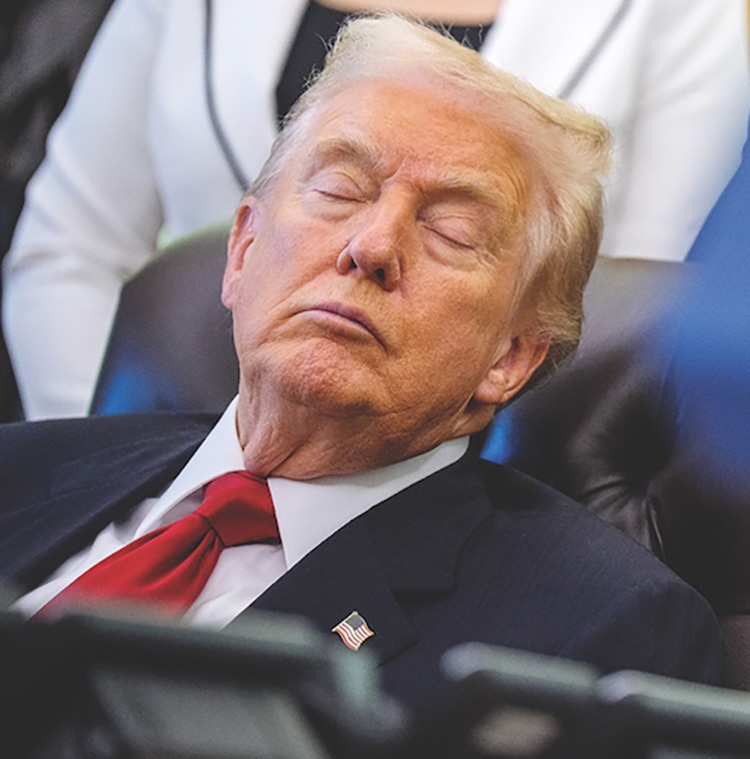
The speed with which Zacharia was hired and fired suggests chaos has returned to the White House after a period of relative calm, as Donald Trump casts about for scapegoats for his terrible poll ratings, while his lieutenants contemplate the post-orange future.
Her five-day tenure will inevitably be compared with the 11 that Anthony Scaramucci spent as communications director back in 2017, but the differences are just as instructive.
The Mooch sold a successful business to work for Trump, whereas it emerged that Zacharia had described herself as a lawyer despite never passing the bar exam. Scaramucci was fired after phoning up a White House reporter to bitch about the chief of staff, Reince Priebus, who he said had tried to “cockblock” him from getting the job. Zacharia has been scrupulously on-message, even after getting ditched.
“President Trump is a kind, wonderful, gracious, thoughtful, enthusiastic, and hardworking man,” she posted after her defenestration. These days, only diehard loyalists volunteer to enter the bunker.
Perhaps Zacharia had assumed her perfect MAGA looks – think Press Secretary Barbie, complete with gold-buttoned blazer – would be enough to offset any deficits in, say, her ability to read. Unfortunately for her, though, former beauty pageant maestro Trump has become less and less interested in women’s appearance in the winter of his years. These days, he’s all about the hot dudes.
The White House is “a very cool place”, he told a rally in Georgia last Friday, because “we are allowed to have big strong handsome soldiers now... There are some reasons to be president.”
At the same rally, he declared that local Democratic senator Jon Ossoff was not a “good- looking man” but his Republican opponent Mike Collins was. “And he’s all man,” he added. The GOP candidate for governor, Rick Jackson, was also a “very handsome, distinguished, beautiful-looking guy”.
Three days earlier, in Alaska, Trump riffed on Ohio senator Jon Husted’s body, praising his record as a college football player. “I don’t do this with men very often,” he told the crowd. “I started examining his body because I didn’t know he was a great athlete. I watched up and down. I looked at his ass.”
At a rally in Kentucky last weekend, he claimed Husted had gained “nine or 10 points since I talked about that”.
Personally, I’m enthused about the idea of America having its first gay president; I had just hoped it would be Pete Buttigieg. But the real story here is that Trump is more disinhibited than ever.
If he sees a guy in the crowd with great muscles – as he did at a US Coast Guard Academy event in May – he will say so. (“Get up here, please. I want to see.”) Combine that with his improv night approach to speeches, where the riffs that get a reaction are refined and expanded over time, and he’ll probably be musing about getting the entire Marine Band to play naked on election day.
This campness is one of the many ways Trump is not a typical conservative, and it points to the difficulty any successor will have in recapturing his popular appeal. While the president was sighing over sexy soldiers and marvelling over senators’ glutes, vice-president JD Vance was in Texas making snarky jokes about the Democratic senate candidate there, James Talarico, being secretly gay.
Then again, consistency has never been MAGA’s strong suit – which partially explains why poor Katie Zacharia struggled at that podium.
More top stories in the latest issue:
INSPECTOR’S CALL
Four years after the Eye first exposed the woeful deals at the heart of the Teesside regeneration project, Angela Rayner is finally sending inspectors in.
SAME OLD STOREY?
A mandarin who was on the Post Office board while it failed to deal with the Horizon IT disaster is now overseeing digital matters in government.
BLIGHTY BLIGHT
Accounts for tech firm Palantir’s UK operations suggest its performance is lagging behind that of the wider global operation by some margin.
CENTRE PARTING
Microsoft withdraws from a deal to use the UK’s largest “sovereign” AI data centre, which the Eye noted early last year is not really “sovereign” at all.
WINTER IS COMING...
An energy polycrisis is brewing, with Donald Trump’s “energy ceasefire” showing no sign of slowing Russia’s bombardment of Ukraine’s infrastructure.
NATS LIFE!
The National Air Traffic Service might be reeling after two technical cock-ups in quick succession, but it’s still somehow picking up technical awards.
MYSTIC MUG
“I simply cannot believe that Trump will ditch the Ukrainians,” wrote Boris Johnson in January 2024, in his finest Nostradamus form.
FIRING LINES
Had the plan to livestream an execution not been rescinded, it would have posed a question for tech companies that have been cosying up to Donald Trump.
Next issue on sale: 5th November 2026